Shabbat Shalom. In honor of Jewish Disability Awareness, Acceptance, and Inclusion Month (JDAIM), here is a unified reflection that bridges the wisdom of our heritage with the lived reality of “determination.”
*The Half-Shekel of Determination: Finding My Voice in the Global Census*
Standing in the heart of Jerusalem recently for the Conference of European Rabbis (CER), I felt the heavy, beautiful pulse of Kol Ha’am—the Voice of the People. In Israel, “shared fate” isn’t an abstract concept; it is the air you breathe. Returning home to Manchester, I find myself reflecting on my own seat at that table. As a member of President Isaac Herzog’s Voice of the People Council, I am tasked with finding the threads that bind us. But for me, these threads are personal. They are woven through the struggle of autism and the triumph of “determination.”
*The Logistics of Belonging*
In this week’s Torah portions, Parshat Mishpatim and Parshat Shekalim, we transition from the thunder of Sinai to the practicalities of a civil society. Mishpatim is obsessed with the dignity of the individual. It teaches us that a society is not judged by its grand declarations, but by its “fine print”—the way it treats its most vulnerable.
For me, this “fine print” has been the map of my life. As someone on the autistic spectrum, I don’t just “experience” barriers; I navigate them daily. In the context of JDAIM, we must ask: Are our grand declarations of unity matched by the logistics of belonging? If a synagogue is physically accessible but socially closed, or if our communal conversations exclude those who process the world differently, the “fine print” of our covenant is being ignored.
*The Architecture of the Mind*
I am often asked: “How are you a journalist if you have difficulty communicating?” The answer lies in a philosophy championed by Temple Grandin. She describes the autistic brain as having two distinct sectors: one for specialized talent and one for social interaction. For me, life has been a relentless effort to “bridge” these two sides. I had to consciously teach myself the “language” of neurotypical society—body language, the nuances of tone, even basic hygiene—and manually push that data into the social side of my brain.
It is exhausting. I push myself to showcase what is possible, but I will be honest: I often push myself too hard. I struggle deeply when things don’t go as planned. Yet, it is precisely this “determination” that has brought me to the Zionist Congress and the President’s Council. “Once someone very close to me said, ‘Josh, you’ll never get married.’ Today, I am married to a gorgeous woman. That victory, more than any title, is what my life is about.”
*The Half-Shekel: No One is Whole Alone*
This Shabbat, we also read Parshat Shekalim, recalling the census where every Jew gave exactly a half-shekel. The symbolism is profound: the rich could not give more, and the poor could not give less.
The “Half-Shekel” teaches us that, individually, we are all incomplete. No matter our status, wealth, or cognitive ability, we are each only a “half.” We need the “other” to become a whole. President Herzog’s vision for Kol Ha’am mirrors this: our greatest asset is our collective dialogue.
If we represent the “Voice of the People,” we must ensure we aren’t accidentally silencing those with disabilities through architectural or social barriers. When we exclude a segment of our community, we are trying to build the Tabernacle with missing half-shekels. The structure simply will not stand.
*From “Disability” to “Determination”*
Inspired by the terminology used in Dubai, I advocate for a shift in language: moving from “people with disabilities” to “people with determination.” This isn’t just semantics; it’s a reflection of the grit required to navigate a world not built for you.
As I return to my work for All Jewish communities, I challenge us all to audit our communal “census.” Let us ensure every half-shekel is collected and every voice—no matter how it is expressed—is heard. We rose from the darkest abyss of history because we did it together. Let’s make sure “together” truly means all of us.

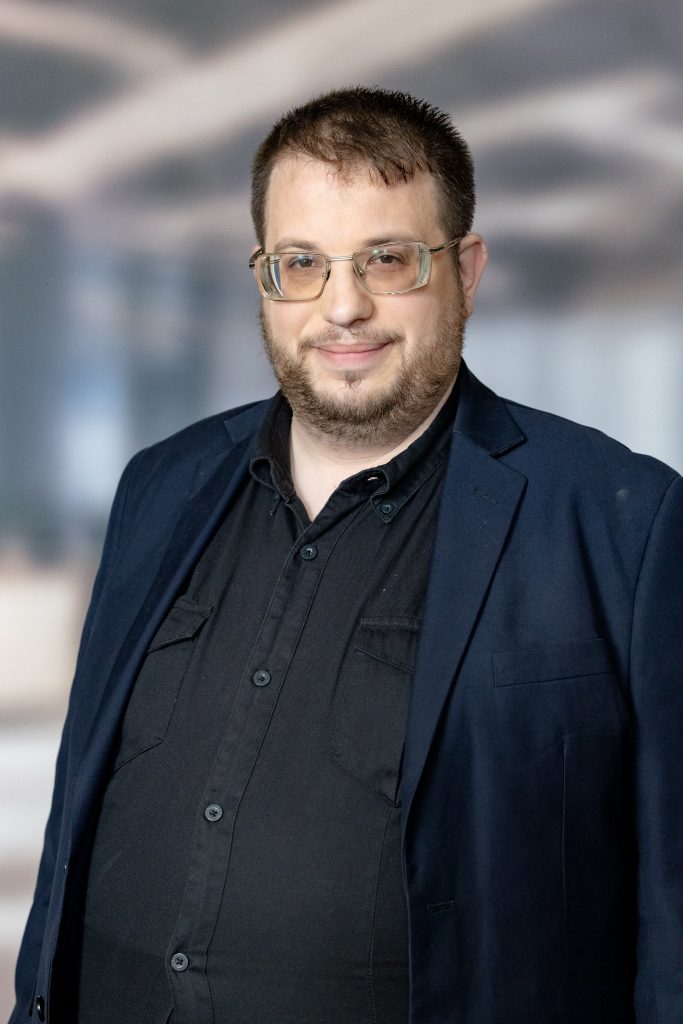
Josh Aronson is a diaspora reporter for Maariv, a leading Israeli newspaper, and a freelance journalist for several Jewish publications worldwide. Based in England, Josh is on the autism spectrum and brings a unique perspective to his reporting. He previously lived in Israel, where he served as a coordinator for people with disabilities.


By clicking “Accept All Cookies”, you agree to the storing of cookies on your device to enhance site navigation, analyze site usage, and assist in our marketing efforts.